



Narita: Heta Village
(Sanrizuka Heta buraku)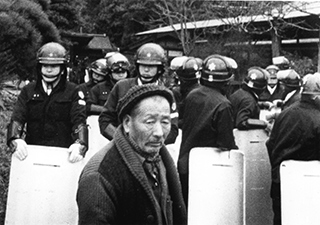 JAPAN / 1973 / Japanese / B&W / 16 mm / 146 min
Director: Ogawa Shinsuke
Photography: Tamura Masaki
Camera Assistants: Kawakami Koichi, Hara Tadashi
Photography, Editing: Ogawa Shinsuke, Fukuda Katsuhiko, Yumoto Mareo, Iwasaki Seiji, Shiraishi Yoko, Nakano Chihiro
Sound: Kubota Yukio
Sound Assistance: Asanuma Yukikazu
Producers: Iizuka Toshio, Tadokoro Naoki, Nosaka Haruo, Fuseya Hiroo, Honma Shusuke, Mikado Sadatoshi
Production Company: Ogawa Productions
Source: The Film School of Tokyo, The Japan Foundation
Ogawa Shinsuke was born in 1936 and would have been 90 next year. To commemorate this occasion, we will project a film print of Narita: Heta Village (1973), by Ogawa Productions. This renowned masterpiece is the sixth film in the Sanrizuka series, through which Ogawa’s group had been documenting the struggle against the construction of Narita Airport since 1968. Set against the backdrop of the early 1970s, a time when the New Left and other social movements had reached a culmination point and were going into rapid decline, the film is noted for its shift in focus from documenting the struggles to making a central theme of film itself. From around the period of their film Forest of Oppression (1967), Ogawa and his staff had been consistent in their desire to observe at close range, and to capture on film, how people were living in the midst of struggle and of direct confrontation with authority. Their films had come to symbolize the times. However, in the process of documenting the changes that were taking place in the farmers’ outlooks and the structure of their community in the midst of revolt, Ogawa and his staff found themselves turning their attention toward the unique sense of time that villagers had originally had as farmers. As outsiders, they approached the village as a living organism—learning about it, observing it persistently, and interacting with numerous historians, and experts in people’s history, thereby delving deep into the folds of the spiritual history of the place. At a screening of the film in 1973, Ogawa stated that he and his team had “depicted the village as if writing a love letter to people for whom they cared deeply.” (Ogawa Shinsuke, Eiga o toru: Documenary no shifuku o motomete, edited by Yamane Sadao, Chikuma Shobo, 1993) Indeed, Narita: Heta Village is steeped in awe and affection for the villagers, while it also marks a shift in direction for the group, one that forced them to confront questions about their ideals and the realities they would face in continuing to make films.
In closing, I would like to share some valuable things Ogawa himself said about why Ogawa Pro moved to Yamagata after finishing Narita: Heta Village.
Before coming to Yamagata, we were filming the protest activities against the construction of Narita Airport in Sanrizuka. During filming, I gradually began to notice that among the wives of farming families in the same village, the way they expressed themselves differed utterly depending on whether they came from the coast or from the inland areas. Maybe it’s the same everywhere but Sanrizuka had this society where each individual had their own way of living and these were all swirling around in a kind of rich chaos. It made me believe that conflict is at its core both a kind of expression and also its own culture. That led me to realize that daily farm work was also a form of expression. Even the rice, the soil, and the sky— everything is continually expressing something, and it is just us that is unable to recognize it. These feelings intensified to the point that they led us to Yamagata, at least that’s what I have come to believe.
(From YIDFF ’89 Official Catalog, “Interview with Shinsuke Ogawa: Yamagata, Documentary and YIDFF ’89”)
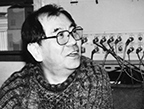 Ogawa Shinsuke
He made his first film, Sea of Youth (1966), founded Ogawa Productions in 1968, and began documenting the movement of farmers in opposition to the construction of Narita International Airport. Beginning with Summer in Narita (1968), he lived with the farmers in Sanrizuka as he filmed them, making seven films in the series in total. Next, he moved to Magino in Yamagata Prefecture, where Ogawa Pro made A Japanese Village—Furuyashikimura (1982) and Magino Village—A Tale (1986). His dedicated work as an organizing member of the first YIDFF in 1989 was instrumental to the festival’s success. He passed away in 1992.