



In Memory of Johan van der Keuken
The Long Holiday
De Grote Vakantie
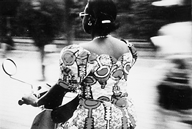 THE NETHERLANDS / 2000 / Dutch, English, Nepalese, several African languages and others / Color / 35mm (1:1.66) / 142 min
Director, Photography: Johan van der Keuken
Sound: Noshka van der Lely
Editing: Menno Boerema, Johan van der Keuken
Production Company: Pieter van Huystee Film & TV
Source: Ideale Audience Int’l
| Johan van der Keuken
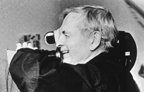
Born in 1938 in Amsterdam. Started photography at the age of 12, and published his first book of photographs, We Are 17, in 1955. Received a scholarship to study at L’Institut des Hautes Etudes Cinematographiques (IDHEC) in Paris, then began documentary filmmaking with Sunday (1960). Established himself as the Netherlands’ leading documentarist with films including Big Ben/Ben Webster in Europe (1967), Flat Jungle (1978), I ♥ $ (1986), Brass Unbound (1992-93). The Eyes Above the Well (1988) was awarded one of the two Runner-Up Prizes at YIDFF ’89. Amsterdam Global Village (1996) was also screened in the International Competition at YIDFF ’97. Also known as a film critic and photographer, and published many collections of his photographs. Other works include To Sang Fotostudio (1997), Last Words—My Sister Yoka (1935-1997) (1998). Passed away in January, 2001. |
 Long Holiday, Johan van der Keuken’s final work, is a record of the two-year period that began in 1998 when he was diagnosed with cancer.
Armed with a video camera, Johan travels around the world, going first to Paris, the spiritual base of his artistic activities. He then journeys with a healthy dose of skepticism to Tibet and Bhutan to seek a different set of values regarding life and eternal life, to Burkina Faso, in search of rebirth and a lust for life, to New York seeking state-of-theart treatment, and finally to Rio de Janeiro and San Francisco for retrospective exhibitions of his work.
The quality of a documentary is often said to be determined by the distance the filmmaker puts between him/herself and the subject, and this is particularly true of van der Keuken’s work. The essence of his films’ expression is in the way van der Keuken, when placing himself in a foreign environment, gauges the distance between himself and his subject and situation. In Long Holiday, too, Johan takes his inner chaos and reconstructs it outside himself, within the chaos of the outside world. Everywhere in the world there are problems. Johan floats through the air and sees the beautiful Earth below. He cannot see the realities of poverty or starvation, nor does he fear falling to his death.
This film is a verification of the life that Johan loved, and is his pilgrimage to death and life.
To the best of my knowledge, of all my friends and associates involved in the first YIDFF 12 years ago, nine have passed away. One of these was van der Keuken, whose The Eye above the Well was first shown to Japanese audiences at the inaugural YIDFF ’89.
Also a photographer, van der Keuken has made a work that moves freely between photography and film, documentary and fiction. While he rarely appears in his films, in Long Holiday van der Keuken is the main character. When the time finally comes to say goodbye, the camera lingers on the friends and family who will be left behind, as well as van der Keuken’s wife Noshka, who worked as his sound recordist for 30 years. Noshka, captured in a variety of situations, including sequences where she gazes at the camera (ie. Johan), shows both loving joy and loneliness, both emotions breathtakingly beautiful.
Van der Keuken created a space and time of his own, and traveled freely through its air. We can do little else than be grateful to van der Keuken for leaving behind a work like this and think of the spirit that exists behind the film.
—Tomita Mikiko