



TrepaNation
- SYRIA, FRANCE, GERMANY / 2025 / Arabic, German, French, Dari, Filipino, Czech / Color / DCP / 222 min
 Director, Script, Photography, Editing, Sound, Narration: Ammar al-Beik
Song: “Naturträne” by Nina Hagen
Honorary Presence – in the role of Producer: Gilles Sandoz (GS)
Production Company: Shams Films at Grammar Factory, GS
Source: Ammar al-Beik
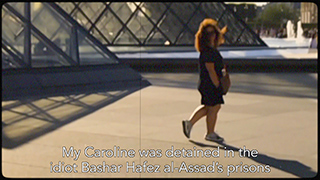
The filmmaker, who fled Syria’s civil war for Germany, traces his memories of the refugee camp where he lived until being granted asylum. In an industrial area far from Berlin stood a bleak residential block, where the filmmaker lived for about a year starting in 2014. It has since been demolished and no longer exists. His days with compatriots—once undeniably present—now live on only in the camera’s record. The aperture of the camera lens that linked the self with the other leads the filmmaker along a path of memory, capturing with overwhelming passion his love for his hometown and his lost family, his yearning for his camp brethren and the people he met. A cinematic resistance to catastrophe, striving to continue the thread of life. (KH)
[Director’s Statement] In Berlin, I found myself armed with a symbolic triangle of salvation—born from shared traumas in a refugee camp on the city’s outskirts. This triangle, forged in exile, connected not only Syrians but people from many lands. It was drawn amidst pain, held together by three guiding figures: Jean-Luc Godard, Alexander Kluge, and Diego Maradona—artists who embodied resistance, intellect, and emotion.
Godard received from me a string of Damascene prayer beads and returned a rare, childlike smile. Maradona, in an unexpected encounter, exchanged signed books and kisses with me—his warmth transformed shame into strength. Kluge, with his philosophical clarity, gave me German-made tools to make sense of it all. Their spirits are deeply woven into my film.
The film was born among scraps—quite literally—in a camp kitchen behind piles of discarded food. Its visual and narrative structure mirrors this triangular salvation. In its final stages, it offered me an unexpected gift: the moment I grasped a shrapnel fragment from the face of my comrade Abu Ali—a relic of war turned into a symbol of wisdom. That fragment appears on screen for twenty-two seconds; its meaning will stay with me for life.
Cinema and football share the same grammar of solitude, resistance, and fair play. Through this film, I return not only to the memory of a camp but to the roots of my own gaze—political, poetic, and deeply personal.
This is not a film about exile—it is a film drawn by exile.
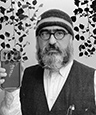 Ammar al-Beik
Pioneer of independent Syrian cinema and conceptual art who began his filmmaking career when he directed Light Harvest (1995). He was the first Syrian filmmaker to screen twice at the Venice Film Festival—I Am the One Who Brings Flowers to Her Grave (2006, YIDFF 2007) and The Sun’s Incubator (2011), the latter winning the Jury Award at the Busan International Film Festival and marking the first film award of the Syrian revolution. Other films include Samia (2008, YIDFF 2009). His films have shown at the Berlin International Film Festival, the Locarno Film Festival, and others. He has also exhibited widely, including a 2019 retrospective at Haus am Waldsee in Berlin. His work is held in major museum collections.