



Hakishka
هاکیشکا- IRAN / 2024 / Azerbaijani / Color / DCP / 49 min
 Directors, Producers: Narges Judaki, Iman Paknahad
Photography: Reza Teimoori
Editing: Shahab Mihandous, Tahereh Hosseini
Sound: Meysam Hassanloo
Source: Iman Paknahad
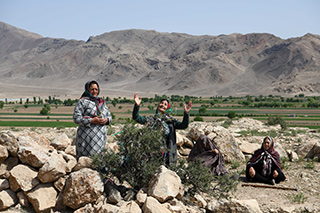
Mid-spring each year, the villagers of Parkandi in northwestern Iran gather to perform the traditional ceremony known as “Hakishka.” It is a mysterious event in which only the women leave the village and dance together in front of a grave of unknown origin. The ceremony day is fast approaching this year, and the women gather in a circle and chat while making the preparations. The men, who are forbidden to participate, talk animatedly about the many mysteries surrounding the ceremony. On the day of, the gathered women sing and dance with all their might, young and old alike, holding nothing back as they shout together, “Hakishka!” The camera dynamically captures the vibrant, life-filled energy of those who take part in the ritual. (NRY)
[Director’s Statement] In a remote village in the northwestern corner of Iran lies a hill, with a grave at its summit and a river flowing below. Once a year, the women of the village gather around this grave—without any men present—to pray and dance. In Iran, it is forbidden for women to dance outside the private sphere or in public spaces. Entering this intimate female gathering was not easy. Traditional and social restrictions in our country rarely allow access to such private ceremonies. With patience and persistence, we gradually found our way into their community—step by step. After three years, we were finally invited into more private spaces and granted permission to bring our camera and document this ritual for the first time.
Being a team composed of a man and a woman played a crucial role in building trust and in communicating—especially with the women. It allowed us to connect more genuinely with both genders, and was particularly important during ceremonies traditionally reserved for women. Narges’s presence as a female director gave the women a sense of comfort and trust that opened many doors. Life in the village is slow and tranquil, and our filming and editing was shaped by this natural rhythm. We chose long, observational takes that convey a sense of calm and a deep connection with nature. Our camera remained respectful and nonintrusive, carefully adhering to the village customs.
This ceremony is a collective act led by women with a central figure guiding it, but all participants contribute equally. We tried to mirror this in our filmmaking—no character dominates, and our own roles were shared equally as well. Sound and image carry equal weight in the storytelling, together capturing the presence of the women and the spirit of their ritual.
For years—perhaps centuries—these women have remained on the margins. Their ritual dance and creative methods of resilience had never been documented before. One of the film’s goals was to preserve this legacy: to portray a sacred ritual but also highlight the strength, creativity, and endurance of women who, despite all challenges, continue to celebrate, persevere, and pray for rain on Iran’s parched plateau.
 Iman Paknahad (left), Narges Judaki (right)
Iman Paknahad, born in 1983; and Narges Judaki, born in 1975 in Tehran, also co-directed the short Bibijan (2022).